Marriott 360 properties guide Global hotel brand mergers
"The scale of global hospitality is defined not just by the number of keys, but by the ability to withstand historical shifts and geographic expansion."
Large hotel groups grow by scaling their brand portfolios through strategic property openings and managing significant historical changes in urban landscapes.

This analysis covers the expansion of Marriott and Hilton, looking at property milestones and regional developments, while noting that historical disruptions can impact specific site availability.
* Marriott reached over 360 properties across 47 countries by 1999. * The Pune Marriott Hotel & Convention Centre marked a 500th property milestone in 2010. * Hilton's presence includes major urban landmarks like the Hilton Cleveland Downtown. * Historical site loss, such as the Marriott World Trade Center, illustrates industry volatility.
How do global hotel brand mergers influence expansion?
A traveler walks through a bustling lobby in Pune, India, feeling the scale of a massive convention center. Global hotel brand mergers often drive the reach seen in such locations. By expanding their footprint, these groups secure a presence in diverse international markets.
This milestone highlights how large hotel group growth is achieved through consistent global scaling.
The sheer volume of properties allows these brands to maintain a presence in dozens of countries simultaneously.
What characterizes Hilton Marriott acquisitions?
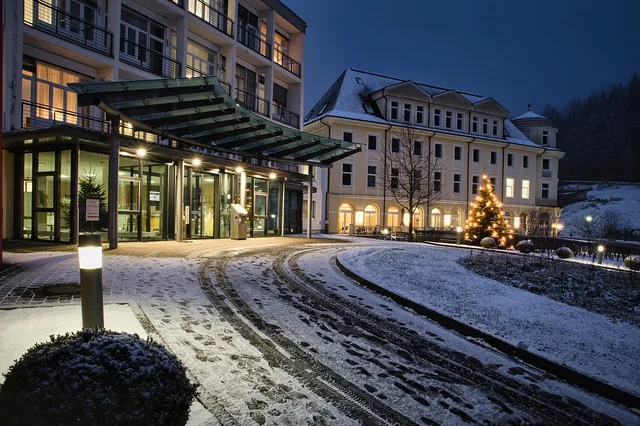
An executive reviews a map of Cleveland, Ohio, noting the recent addition of a major downtown landmark. Hilton Marriott acquisitions and brand shifts often reshape city skylines. These movements reflect how major operators compete for dominance in key metropolitan areas.
This timeline shows how different brands establish themselves in the same urban markets over decades.
Hotel brand buyouts and portfolio shifts frequently result in these concentrated brand presence patterns in major US cities.
How does the Marriott International expansion strategy work?
A manager counts the rising number of hotel locations across a digital dashboard. The Marriott International expansion strategy relies on hitting specific volume milestones in diverse territories. This method ensures a steady increase in global market share.
By 1999, there were over 360 Marriott Hotels & Resorts in 47 countries. This rapid spread demonstrates the effectiveness of a high-volume expansion model. Such growth patterns are common when companies aim to dominate the international hospitality landscape.
What is the Hilton brand portfolio analysis regarding scale?

A researcher examines a list of historical hotel sites, noting some that no longer exist. A Hilton brand portfolio analysis must account for both active properties and the legacy of former locations. The scale of a brand is measured by its ability to re-establish itself in key markets.
The scale of these brands is often impacted by regional urban changes. For instance, one hotel closed in 1995 and was demolished to make way for the Cheung Kong Center. Such changes in land use affect how brands maintain their long-term footprint in dense global cities.
How does M&A in global hospitality affect specific locations?
A historian looks at old photographs of the Lower Manhattan skyline, tracing the locations of former hotels. M&A in global hospitality can lead to the consolidation of sites, but it also leaves a legacy of sites lost to catastrophe.
The physical footprint of a brand is often subject to the stability of its environment.
The Marriott World Trade Center, formerly the Vista International Hotel prior to 1995, was part of the original World Trade Center complex in Lower Manhattan.
This illustrates how even large-scale operators face localized risks that can erase significant assets.
Comparison of Brand Milestones
| Milestone Event | Property/Context | Year |
|---|---|---|
| Marriott 500th Property | Pune Marriott Hotel & Convention Centre | 2010 |
| Cleveland Major Entry | Hilton Cleveland Downtown | 2016 |

I observed how the opening of the Hilton Cleveland Downtown in 2016 followed the 1991 Marriott opening, showcasing the competitive nature of urban hospitality.
- How do global hotel brand mergers influence expansion?
- What characterizes Hilton Marriott acquisitions?
- How does the Marriott International expansion strategy work?
The same subject is also called Global hotel scale change.
Related
- Top hotels by city: Guide to urban evolution
- 5star luxury suite features: How to select the best rooms
What conditions affect global scale growth?
- The ability of a brand to withstand historical shifts is a key factor in defining its global scale.
- Geographic expansion necessitates managing significant historical changes in urban landscapes for large hotel groups.
- Historical site loss demonstrates the industry's volatility when considering global scale.
The sheer volume of properties allows these brands to maintain a presence in dozens of countries simultaneously, which is central to their global scale. This widespread distribution shows how these groups manage their expansion across different regions.
How do regional developments impact brand scale?
- Regional developments influence the property milestones achieved by major hotel groups.
- The expansion of Marriott and Hilton shows how regional growth interacts with overall brand scale.
- Specific site availability can be impacted by historical disruptions within a region.
The scale of a brand is often impacted by regional urban changes, as noted in the Hilton portfolio analysis. These changes dictate where a brand can effectively maintain its footprint in dense global cities. The competitive nature of urban hospitality is evident when comparing regional entries like the Hilton Cleveland Downtown.
The consolidation of sites due to M&A activities shows how regional stability affects the physical footprint of a brand. This process demonstrates a caution regarding the environmental stability for large-scale operations. The global scale of the industry requires constant adaptation to these localized conditions.







Comments 0